
Service Quality and Patient Safety

BDMS is committed to delivering healthcare services that prioritize patient safety, high quality and high value through a value-based care approach. We integrate multidisciplinary expertise, standardized clinical practices, advanced medical technologies and continuous quality improvement to support patient safety, enhance care outcomes and improve patient experience across our hospital network.
Strategy and Management Approach

BDMS has established quality policies, operational guidelines and improvement plans to ensure consistent healthcare standards across the Group. Our approach focuses on patient safety, clinical excellence, service efficiency, equitable access to care and continuous improvement in line with national and international healthcare standards. To support effective implementation, BDMS develops clinical guidelines, quality manuals, risk management processes and accreditation plans suitable for each hospital’s operational context, while maintaining shared quality expectations across the network.
Quality Improvement and Patient Safety Plan
The company has developed a Quality and Patient Safety Improvement Plan to support the Group’s mission and strategy, with a focus on establishing a service system with the highest standards of safety, efficiency, and patient experience (High Reliability & Patient-Centered Care). The plan covers identification, analysis, and continuous development to enable network hospitals to better respond to the needs of patients and service recipients, while strengthening a culture of quality at all levels of the organization.
Integrating quality and safety into all work processes enables
- Continuous Improvement: continuous improvement in the quality of care
- Clinical Excellence: excellence in clinical outcomes aligned with international standards
- Streamlined Processes: core efficient, streamlined, and less complex processes
- Enhanced Patient Experience: safer care delivery and continuously improved patient experience
- Value-Based Healthcare approach (VBHC):delivery of the highest value of medical services
Healthcare Accreditation
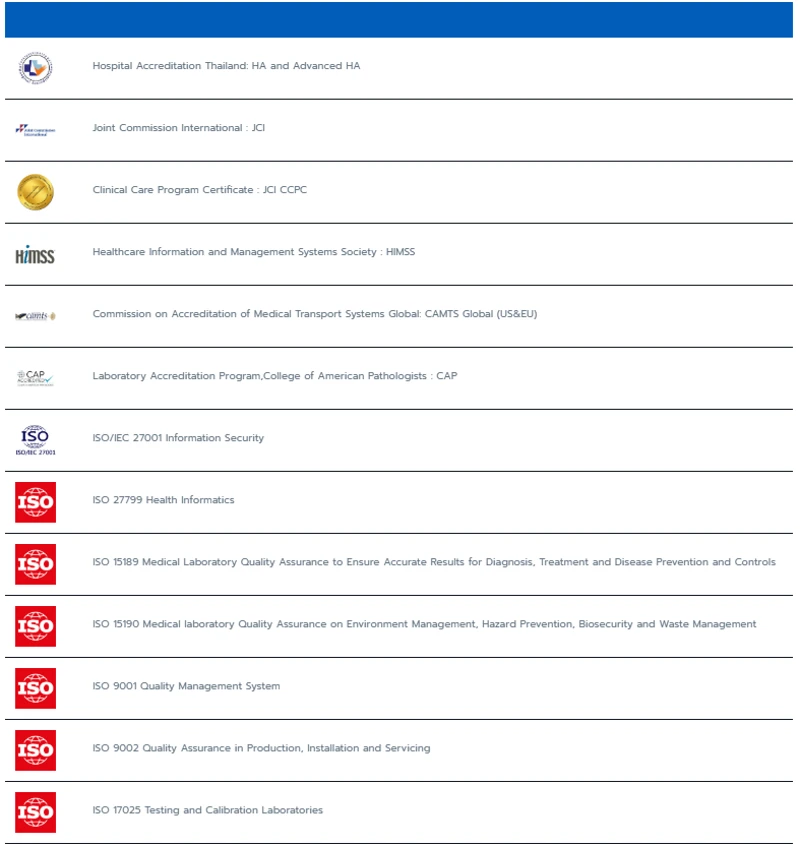
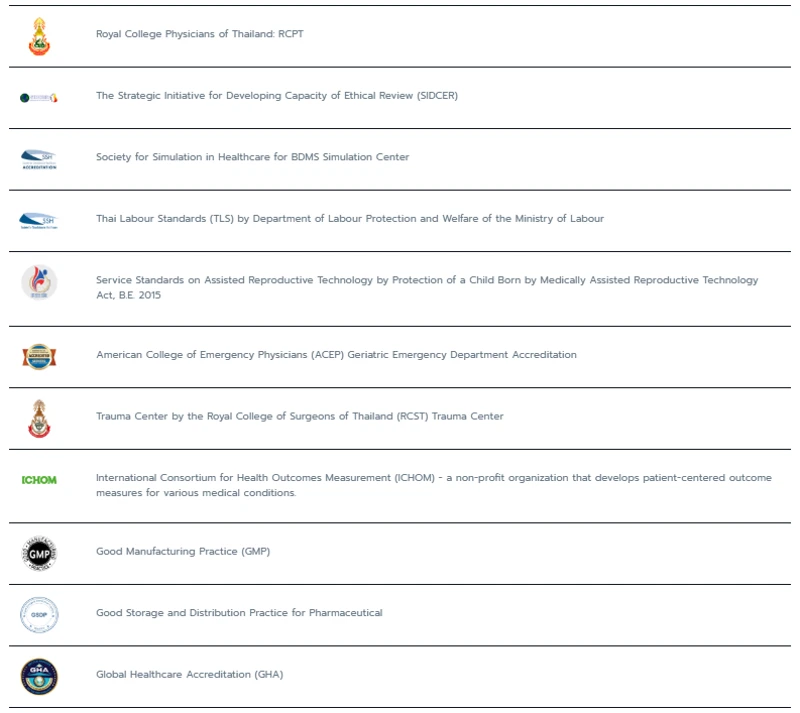
Healthcare accreditation is a key mechanism for maintaining BDMS’s quality and patient safety standards. Hospitals across the BDMS network undergo assessments by recognized national and international accreditation bodies. The accreditation process covers healthcare system design, internal quality control, quality evaluation and certification, supporting continuous improvement and risk reduction across care delivery.
| BDMS Accreditation 2025 | ||
|---|---|---|
|
The company operates in accordance with healthcare service policies and standards, covering health and safety impact assessments to support continuous improvement. Key accreditation results are as follows |
||
|
12 Hospitals under BDMS participated in the JCI evaluation. All hospitals were accredited with safety standards. |
14 Hospitals under BDMS with emergency medical service centers are certified CAMTS Globalcertification. |
100% of hospitals are certified or re-accreditation their certification according to JCI, HA, and Advanced HA standards, ensuring the highest level of patient safety. |
BDMS Quality Standards at National and International Levels
Patient Safety Culture
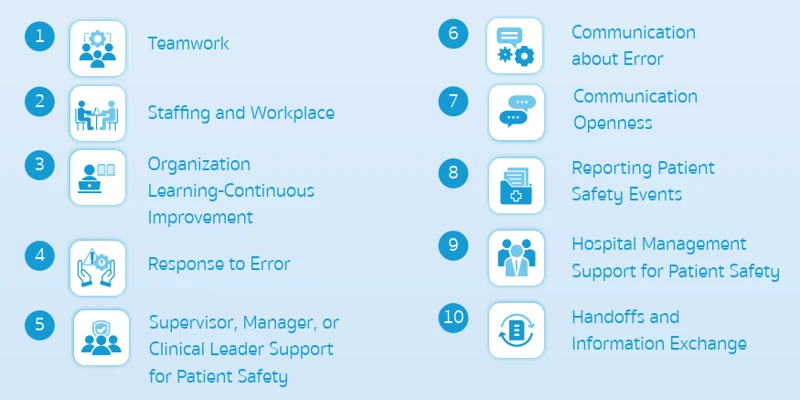
BDMS promotes a strong patient safety culture across the organization. The Group conducts an annual Patient Safety Culture Survey based on Agency for Healthcare Research and Quality: AHRQ standards to assess strengths and improvement opportunities in areas such as teamwork, communication openness, response to error, patient safety event reporting, handoffs and management support. The survey results are used to enhance service standards and reinforce safety as a shared responsibility.
Marketing Communication, Sales and Labeling Guidelines

BDMS has established Marketing Communication, Sales and Labeling Guidelines in accordance with applicable laws, professional standards, and international practices to ensure that communication relating to healthcare services, treatments, and medications is conducted ethically, transparently, responsibly, and without causing misunderstanding to service recipients.
These Guidelines apply to BDMS hospital networks and subsidiaries, as well as to employees and medical staff involved in marketing communication, advertising, promotional and non-promotional materials, sales practices, patient communication, digital content, and medication labeling. BDMS expects all relevant parties to comply with these Guidelines, internal requirements, and ethical business conduct principles across all communication channels in which BDMS operates, including the management of relationships with doctors, medical staff, patients, and customer in an ethical and transparent manner, while appropriately respecting privacy.
Ethical Interactions, Transparency and Independence
BDMS requires all interactions with patient groups, patient organizations, doctors, medical staff, healthcare professionals and relevant stakeholders to be conducted ethically, transparently, professionally, and in the best interests of patients.
Contributions and collaborations with healthcare professionals must be based on legitimate purposes, properly reviewed, documented, and reported transparently in accordance with applicable laws, professional standards, industry codes, and internal requirements. Such contributions must not influence clinical judgment, treatment decisions, referrals, procurement decisions, or recommendations of BDMS products and services.
Engagements with patient organizations must be transparent, ethical, and respectful of the organization’s independence. BDMS does not control or unduly influence patient organizations’ governance, activities, communications, advocacy positions, or decision-making.
Criteria for Advertisements or Announcement about Healthcare Facility

BDMS requires that advertisements and announcements relating to healthcare facilities be accurate, balanced, clear, transparent, and not misleading. Promotional and non-promotional materials, including activities, content, and materials published on social media and digital channels, must be reviewed, assessed, and monitored before and after use, as appropriate, to ensure compliance with applicable laws, professional standards, industry codes, and internal requirements. Where direct-to-consumer communication is applicable, the information communicated must be appropriate, not exaggerated, and must not create unreasonable expectations regarding treatment outcomes or healthcare services.
Advertisements or Announcements about Healthcare Facilities Permitted without Regulatory Pre-Approval
|
Name, address , and corporate logo |
Qualifications of Healthcare and Public Health Professionals |
Treatment, medication, medical and other service fees |
Patients’ rights as stated in the regulations |
||
|
Medical services provided by healthcare facility and approved operating hours |
Knowledge and academic research on medical and healthcare that is accurate, realistic and not misleading about the healthcare facility. Precautions from treatment risks, danger and side effects |
Notifications such as medical records destruction, relocation, important event announcements, or “Inquire Medical Fees Here” signage |
|||
Prohibited Healthcare Facility Advertisements
| Entirely or partially represent false, baseless and exaggerated information; conceal facts; and provide misleading information or comparison about the service quality between healthcare facilities. | Create false expectations about medical professionals or equipment. Fail to commit as stated in the advertisements or announcements. Provide information non-supported by academic research. | Advertise misleading names of healthcare facilities which cause misunderstanding on the business license. |
| Advertise communication that is potentially physically or mentally harmful or causes annoyance to customers or the public. | Use inappropriate, fear-provoking, obscene or sexually provocative advertisement. | Publish impolite messages orexhibit patient suffering. |
| Disparage, defame, insult or degrade other healthcare facilities or professionals. | Share social disturbing messages that contradict ethics and good morals. | Associate with royal salutation messages and actions concerning the monarchy, the Queen, heir or designated regent. |
Guidelines for Pharmaceutical Distribution, Medical Supply, Healthcare Service and Other Service Fees

BDMS requires the distribution of medicines, medical supplies, and the disclosure of related service fees to be transparent, accurate, and verifiable. Service recipients must receive sufficient, appropriate, and understandable information to support informed decision-making. Price disclosure, cost estimation, and issuance of related documents must therefore be carried out clearly and in compliance with applicable requirements.
|
Medicine Prescription and Price Notice Pre-inform the generic or nonproprietary name of the medicine, dosage form, dosage, quantity, instruction and duration of use to the patients following the medical professional standards. |
Price Notification Notify the medicine, medical supply, healthcare service and other service fees to patients prior to purchase, treatment or upon request. |
QR Code Transparently and adequately display the price comparison of themedicine, medical supply, healthcare service and other services in the healthcare premises according to the Department of Internal Trade. |
|
|
Healthcare Cost Estimation Provide cost estimations to all patients per preliminary diagnosis. |
Medical Invoice Specify the medication names according to theprescription and the price per unit. |
||
Drug and Medicination Labeling

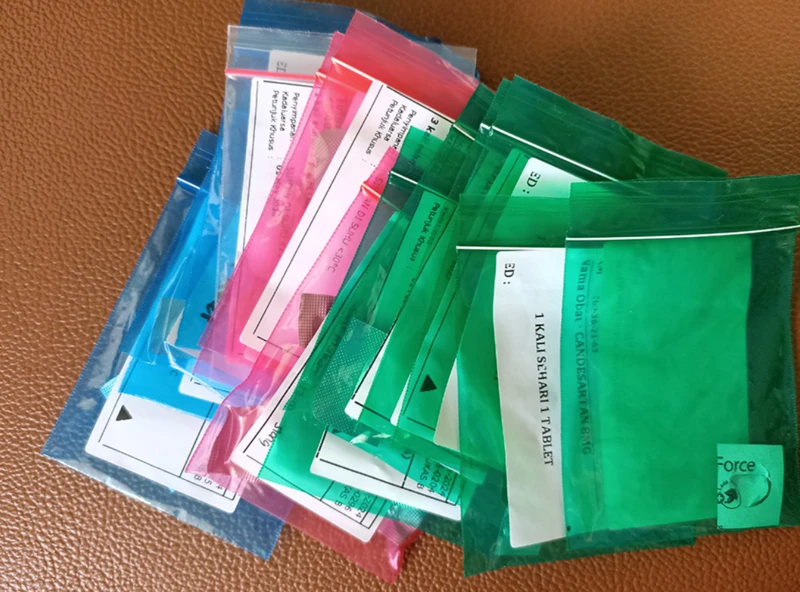
BDMS requires that medication labels and information on medicine packaging be accurate, clear, and appropriate so that service recipients receive complete information regarding the medicine, including patient identification, medicine details, instructions for use, indications, precautions, and other relevant information, in order to promote safe and appropriate use of medication.
BDMS’s network hospitals distribute medications with labeling and packaging in compliance with the following requirements
| Patient’s full Name, Identification Numbers and Date of Birth | Issue Date | Drug’s Name Stating Trade Name and/or Chemical Name as well as Local Names,Dosage Form and Concentration |
| Lot Number or Batch Number | Expiry Date | Instructions |
| Dosage Quantity | Medication Indications and Properties, Precautions or Suggestions | Name of Medical Professional Prescribing Drug |
Reporting Channels for Marketing Communication, Sales and Labeling

BDMS provides all stakeholders with channels to contact the Company, submit comments and report improper conduct relating to marketing communication, sales practices, and medication labeling through the channels specified in the Company’s Code of Conduct and disclosed on the Company’s website. All reported concerns are handled in accordance with relevant internal procedures, investigated as appropriate, and followed by corrective and preventive actions where necessary to support compliance and continuous improvement.